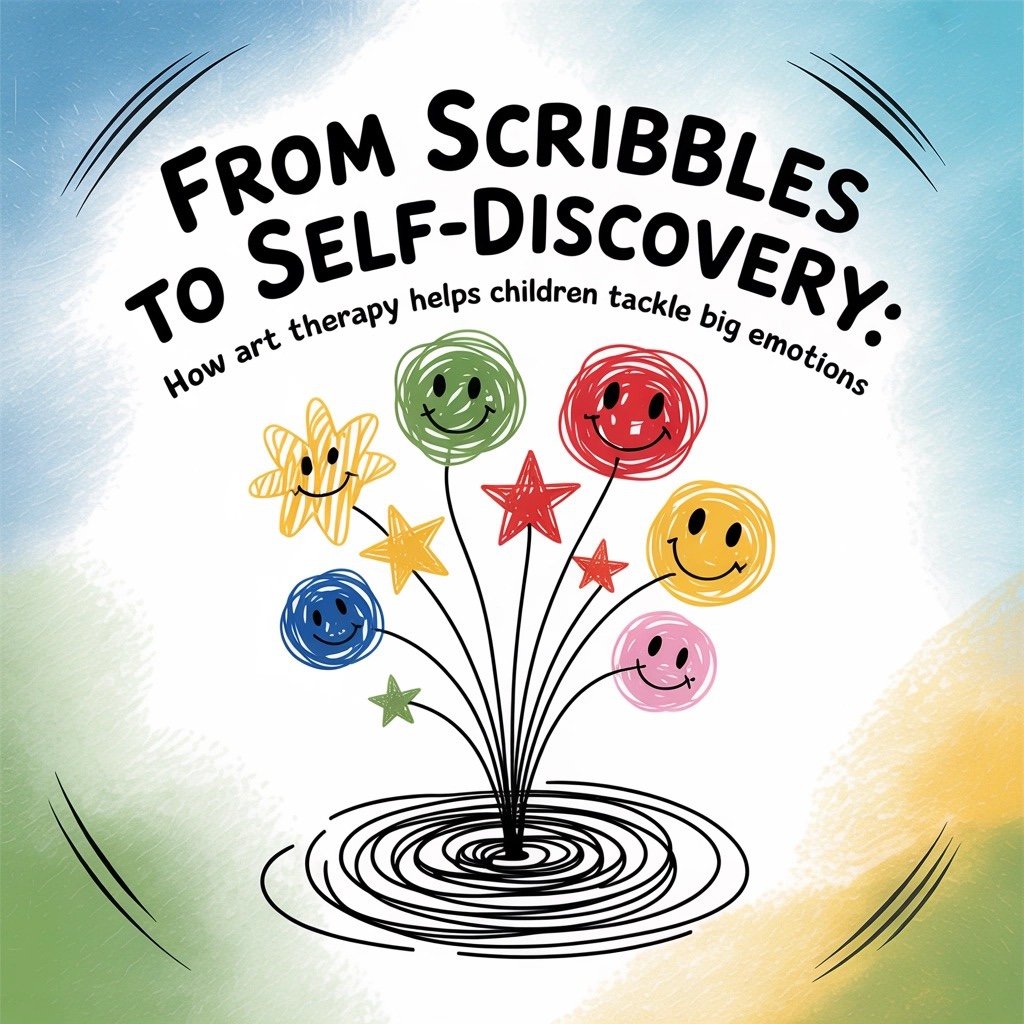
Children often lack the vocabulary to explain complex emotions. But give them art supplies, and suddenly they have a whole new language. Art therapy can transform emotional challenges into opportunities for growth, healing, and connection.
When Words Fail, Art Speaks
Art therapy is not just about creating pretty pictures. It is a therapeutic approach that uses creative expression as a gateway to emotional processing. For children, whose verbal skills are still developing, art can become a natural language for feelings that are too big or complex for words.
Art therapy provides a safe container for overwhelming emotions. Instead of keeping feelings bottled up or expressing them through challenging behaviors, children can transfer emotions onto paper, clay, or other materials.
The Science Behind the Scribbles
When children engage in creative activities, several helpful processes can occur:
- Neural integration: Creating art engages multiple parts of the brain and can support emotional processing.
- Stress reduction: Art-making can support the body’s calming systems.
- Sensory regulation: Materials like clay, paint, and textured paper provide grounding sensory input.
- Distance and perspective: Externalizing emotions through art makes them easier to explore.
The Emotional Palette
For anxiety and worry
- Mandala creation can create order and promote calm.
- Worry monsters can help children imagine a place for their worries to go.
- Clay work offers tactile grounding.
For anger and frustration
- Action painting can provide safe physical release.
- Tearing and collage can channel destructive impulses into creation.
- Clay pounding offers an acceptable outlet for anger.
For sadness and grief
- Memory boxes can hold special memories or feelings.
- Feeling landscapes can help children paint emotional weather.
- Collaborative murals can reduce isolation.
Building Emotional Skills Through Art
Art therapy helps children identify emotions, practice self-regulation, develop coping strategies, and create emotional narratives. These skills can transfer into daily life as children learn to pause, reflect, communicate, and cope.
Signs Your Child Might Benefit
- Difficulty expressing emotions verbally
- Behavioral outbursts or withdrawal
- Major life changes, losses, or stressful experiences
- Anxiety, depression, or mood fluctuations
- Developmental, learning, or social challenges
Getting Started
Parents can begin by observing emotional patterns, consulting with professionals, and explaining art therapy in age-appropriate terms. The goal is not to create perfect art. The goal is to help children feel seen, supported, and more equipped to handle big emotions.
Looking for support that meets you where you are?
Schedule a Consultation